POWDER METALLURGY
- Premium Tungsten Carbide Tooling – Designed with exceptional compressive strength and controlled hardness, ensuring high precision, durability, and consistent performance in powder metallurgy applications.
- Applications & Products
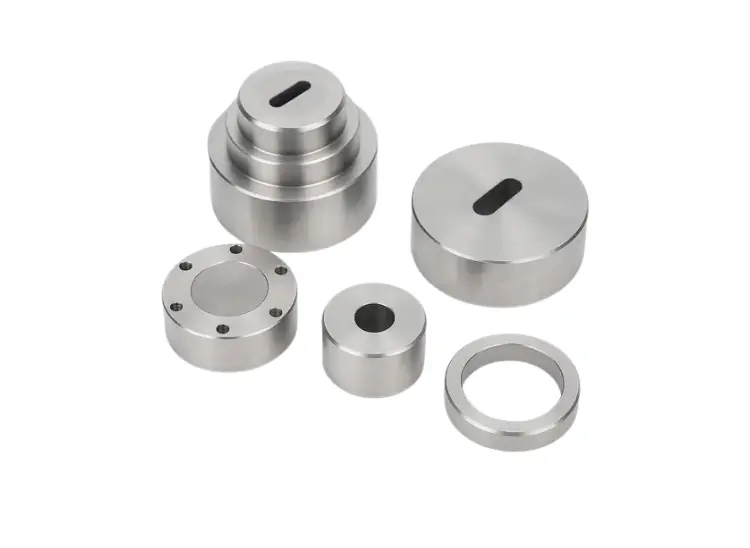
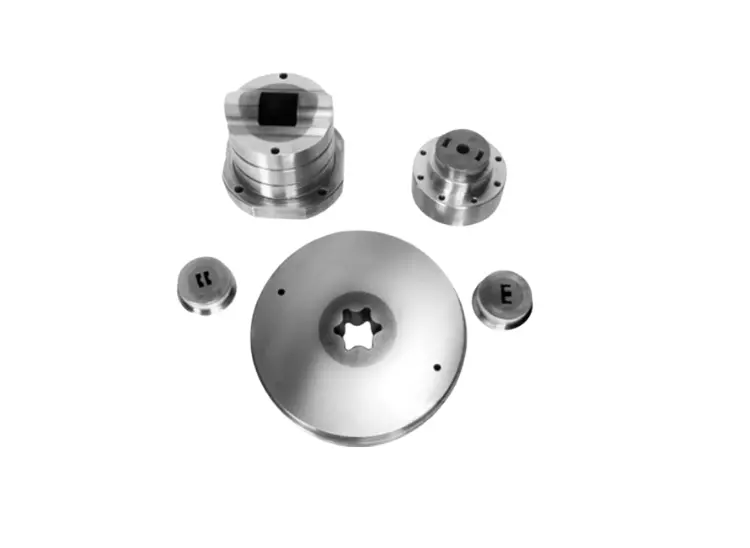
- Powder Compaction Dies & Punches – Engineered for efficient and accurate compaction of ferrites, ceramics, abrasives, tungsten carbide, refractory bricks, and iron powders.
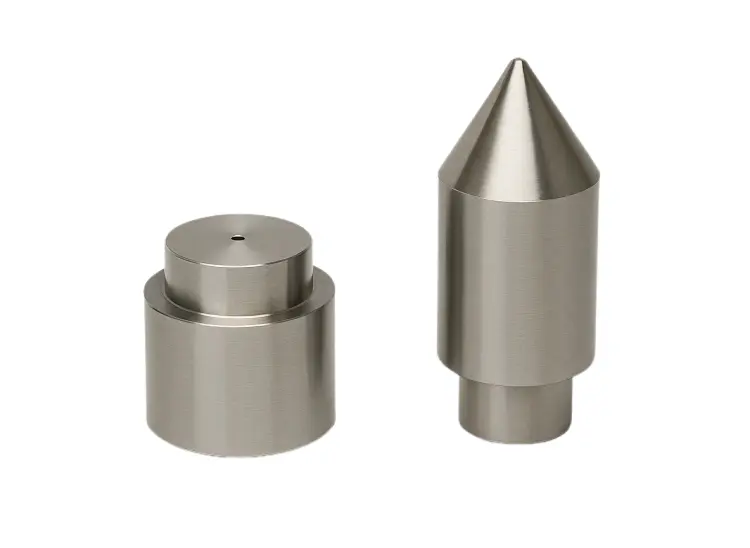
- Core Rods – Precision-manufactured for pressing and forming complex powder metallurgical components with superior dimensional accuracy and repeatability.
- Industry Use – Widely used across ceramic production, ferrite manufacturing, and metal powder industries to achieve reliable and high-quality outputs.
- Performance Benefits – Delivers stable mechanical properties for precise powder compaction, extended tool life, reduced downtime, and cost-effective manufacturing.
- Additional Advantages – Provides excellent wear resistance, dimensional stability, and consistent results under high-pressure conditions, making it a preferred choice for industrial tooling solutions.
How Tungsten Carbide Is Made
From raw tungsten powder to finished cemented carbide — our controlled powder-metallurgy process in five stages.
- Step 1
Carburization
When tungsten and carbon are heated in a furnace, they combine to form tungsten carbide (WC) — the hard base material.
- Step 2
Mixing & Granulation
Cobalt and other binder metals are blended with the tungsten carbide, then dried and granulated into a fine, uniform powder.
- Step 3
Pressing
The powder is compacted in a mould into the required shape. At this stage the part is still soft — about as hard as chalk.
- Step 4
Sintering
The pressed part is sintered at about 1400°C (2550°F) in a vacuum or non-oxidizing atmosphere, fusing it into dense cemented carbide.
- Step 5
Grinding & Finishing
Finally, the hardened carbide is precision-ground, shaped, and finished to exact tolerances and surface specifications.