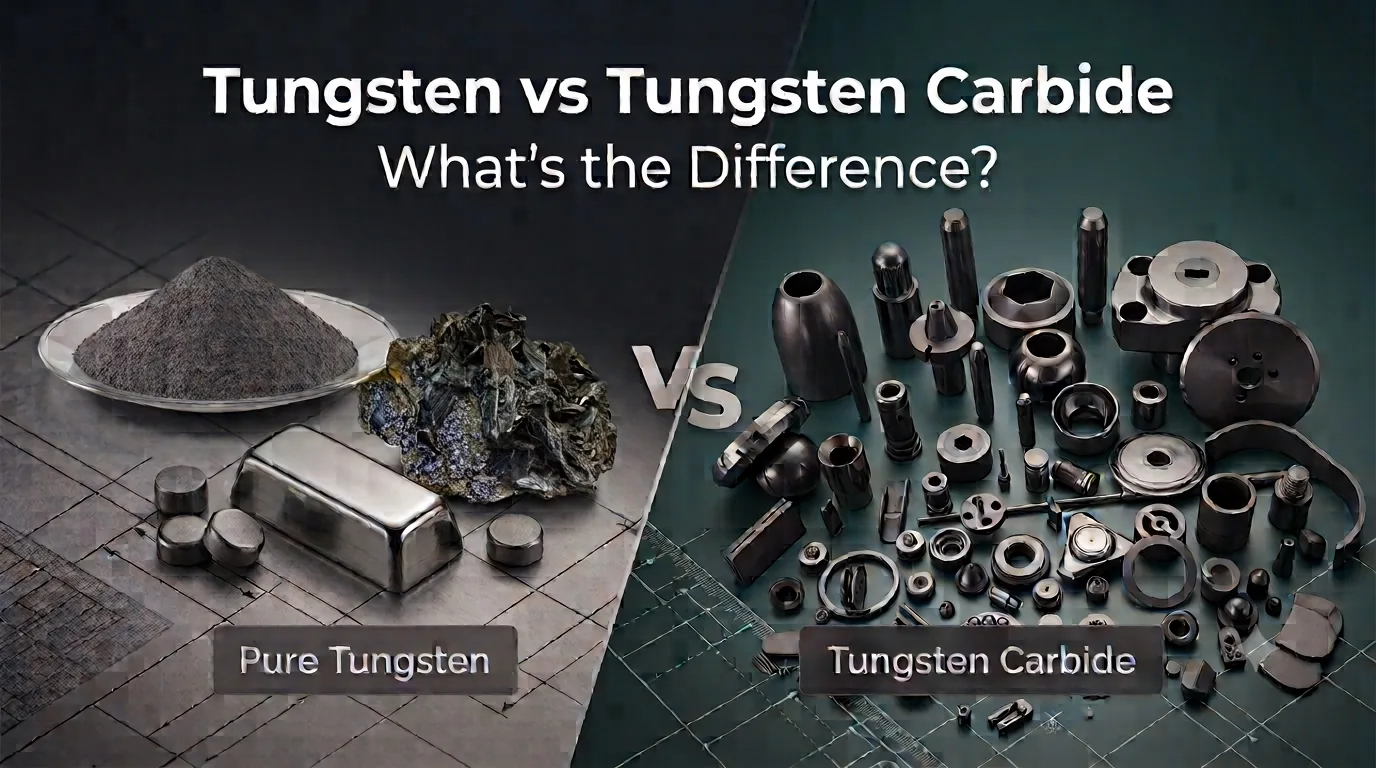
People often use the words “tungsten” and “tungsten carbide” interchangeably, but they are two different materials with very different properties. This guide explains what sets tungsten apart from tungsten carbide and where each is used.
What Is Tungsten?
Tungsten is a pure chemical element (symbol W, atomic number 74). It is a dense, silver-grey metal with the highest melting point of any metal, about 3,422 °C, and a density of roughly 19.3 g/cm³. In its pure form, tungsten is hard for a metal but still ductile enough to be drawn into wire. It is commonly used for lamp filaments, welding electrodes, heating elements, balancing weights and radiation shielding.
What Is Tungsten Carbide?
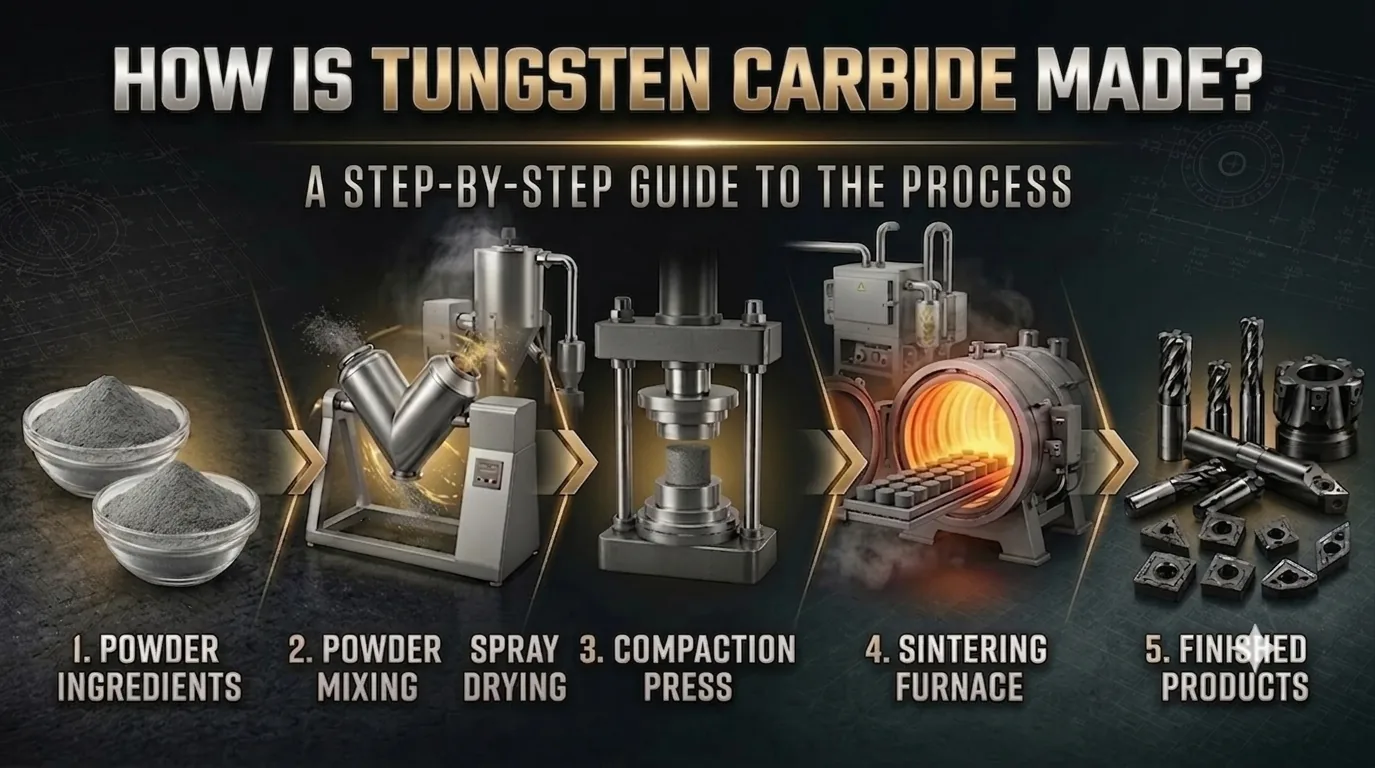
Tungsten carbide (chemical formula WC) is a compound formed when tungsten chemically combines with carbon. It is far harder and more wear-resistant than the pure metal. On its own it is a fine powder, so in industry it is bonded with a metallic binder, usually cobalt, and sintered into a solid known as cemented carbide. This is the material used for cutting tools, forming dies, mining inserts and wear parts.
Key Differences Between Tungsten and Tungsten Carbide
| Property | Tungsten (metal) | Tungsten Carbide (WC) |
|---|---|---|
| Type | Pure element | Compound (W + C) |
| Hardness | Hard for a metal | Extremely hard |
| Density | ~19.3 g/cm³ | ~14–15.6 g/cm³ |
| Melting point | ~3,422 °C (highest of all metals) | ~2,870 °C |
| Ductility | Can be drawn into wire | Brittle, not ductile |
| Typical uses | Filaments, electrodes, weights | Cutting tools, dies, wear parts |
Which Is Harder, Tungsten or Tungsten Carbide?
Tungsten carbide is far harder than pure tungsten. While tungsten is one of the harder metals, tungsten carbide is one of the hardest materials used in industry, which is exactly why it is the material of choice for tooling and wear components.
Is Tungsten Carbide Stronger Than Tungsten?
It depends on the type of stress. Tungsten carbide is much harder, more wear-resistant and has far higher compressive strength than pure tungsten, so it withstands crushing and abrasive loads exceptionally well. Pure tungsten, on the other hand, is tougher and more ductile. It can flex and be drawn into wire without shattering, whereas tungsten carbide is brittle and can chip under sharp impact. So for hardness, wear and compressive strength, tungsten carbide is the stronger material; for impact toughness and ductility, pure tungsten performs better. In most tooling and wear applications, where hardness and wear resistance matter most, tungsten carbide is the stronger choice.
Tungsten vs Tungsten Carbide: Density
Pure tungsten is denser than tungsten carbide. Tungsten has a density of about 19.3 g/cm³, one of the highest of any metal, while tungsten carbide (as cemented carbide) typically ranges from roughly 14 to 15.6 g/cm³, depending on how much metallic binder it contains. That is why pure tungsten is preferred where maximum mass in a small volume is needed, such as counterweights and radiation shielding, while tungsten carbide is chosen for hardness and wear resistance rather than sheer weight.
When to Use Each
- Choose tungsten (the metal) when you need extreme density, a very high melting point, electrical conductivity or the ability to form it into wire, such as electrodes, filaments or counterweights.
- Choose tungsten carbide when you need extreme hardness and wear resistance, such as cutting inserts, forming dies, mining buttons and wear parts.
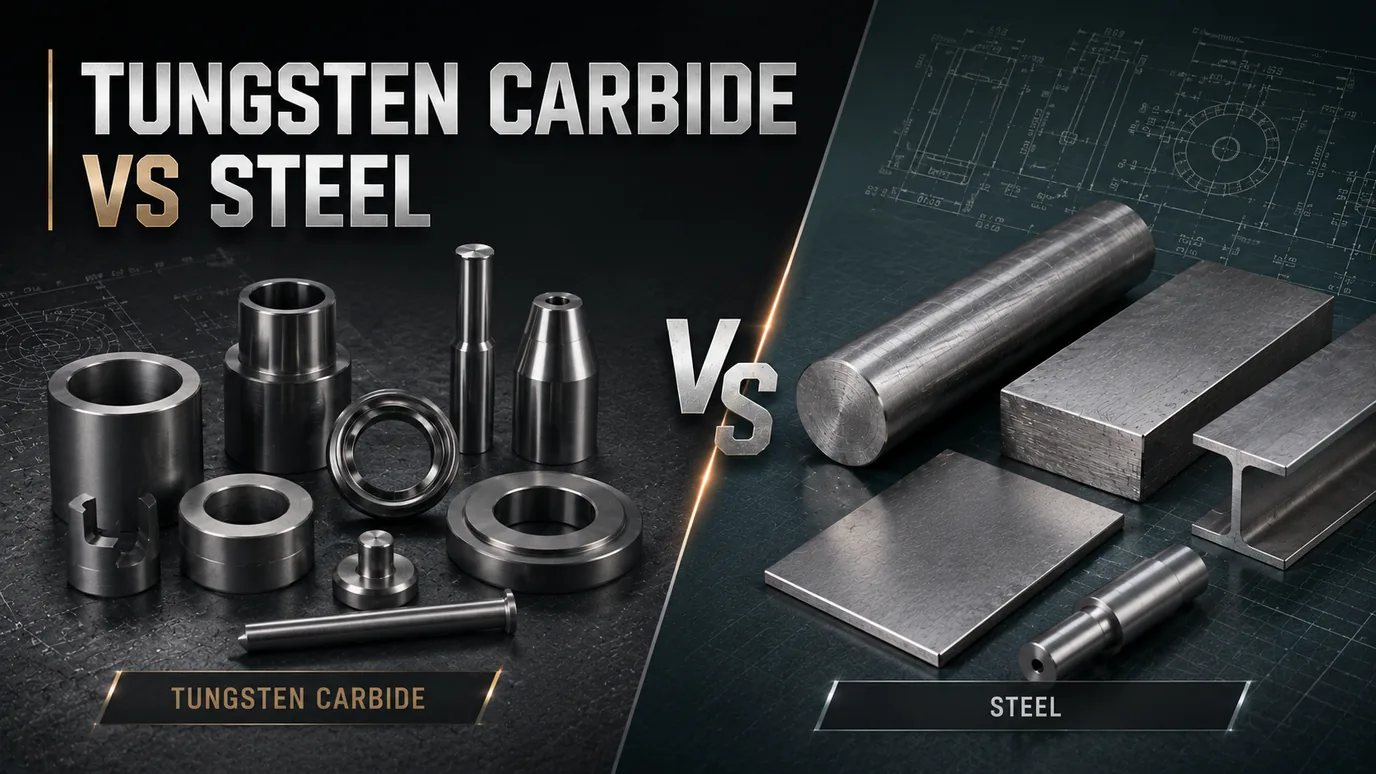
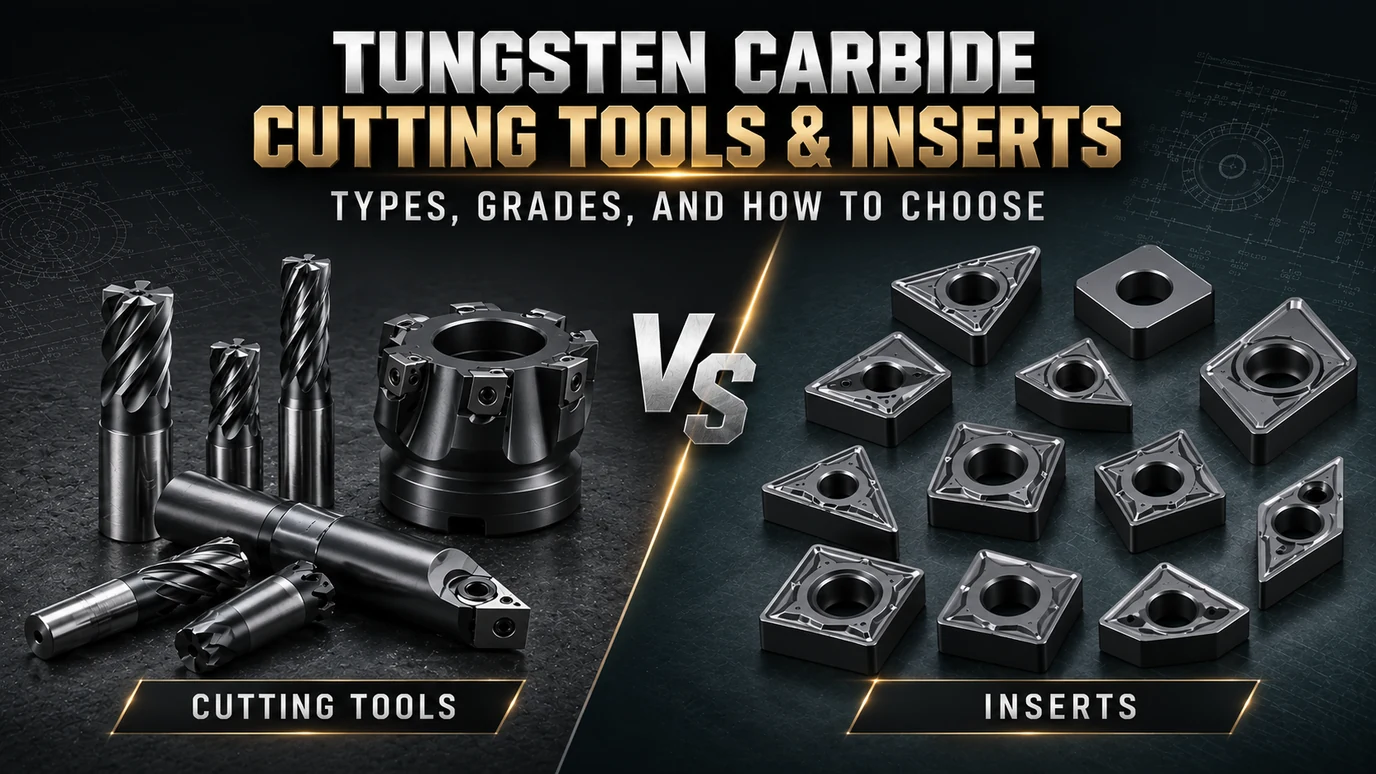
In short: tungsten is the raw metal, and tungsten carbide is the much harder compound made from it. For industrial wear and cutting applications, tungsten carbide is almost always the right choice. If you are weighing carbide against steel rather than pure tungsten, see our comparison of tungsten carbide vs steel, and for tooling specifically, our guide to tungsten carbide cutting tools. Explore our tungsten carbide grades to compare specifications, or contact our team for help selecting the right grade for your part.